Leighton Moss at any time of the year is well worth a visit, but for me there is something special about spending an autumn day there. The long spell of good weather we've been enjoying was forecast to come to an end, so we decided to make an early start and arrived just as the sun was coming up.
The fields were full of plump pheasant just visible through the haze. Not a native bird, but one that seems to have become synonymous with the British countryside.
 Before a visit I usually check the RSPB website to find out what the latest sightings have been. Up to five otters had been recently seen at the Lower Hide. We spent a couple of chilly hours hoping the morning fog would clear and the otters would show themselves. The fog was persistent but just as we decided to leave we briefly saw two otters at the far end of the reedbed. Nowhere near close enough for a photo, but at least we caught sight of them!
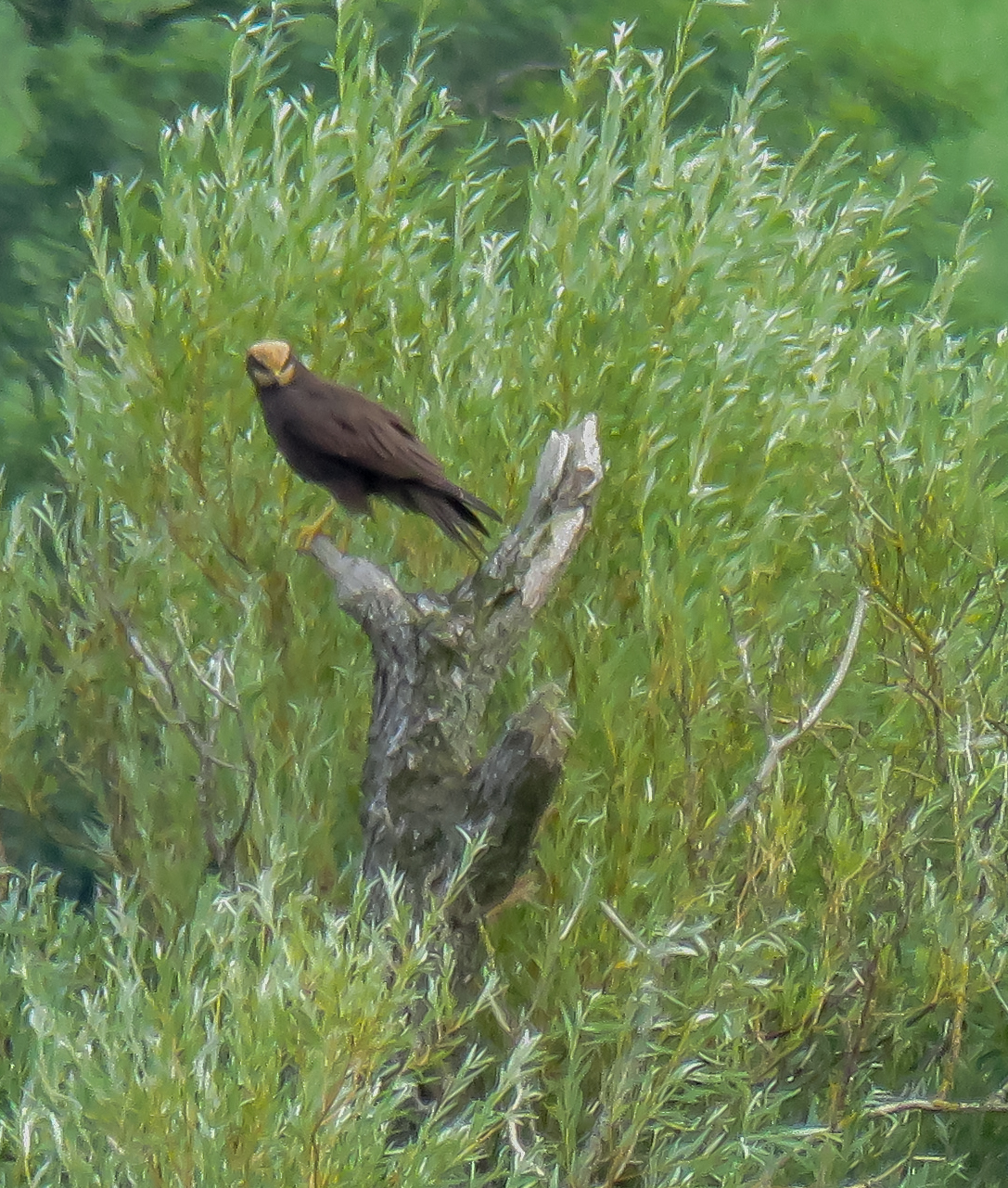
Across from the hide a Peregrine Falcon was just about visible in the bare branches of a tree.
A Great White Egret made a graceful entrance, but was soon chased off by a heron which clearly had set its sights on that particular fishing spot.
After giving chase the heron resumed his perch.
A truce seemed to have been called as the fog descended once again, with the Egret standing off to the left, the Heron on its wooden perch and the Peregrine high up in its tree.
Walking back along the woodland path towards the Causeway we saw a large flock of Siskins and I had my first sighting of a Redpoll.
The reserve is home to a large number of Bearded Tits. In spring and summer they exist on a diet of insects. Later in the year they begin to eat the seeds of the reed plants. In order to be able to digest them, they also eat grit, which helps to grind down the hard seeds. Grit trays are placed near the Public Hide which enables visitors to see these beautiful birds up close.
Other bird species are a little less specialised in their diet and have become quite used to sharing whatever you might be having for lunch! A very tame Robin took some crumbs from my hand and a vole managed to run off with a good helping of banana bread before his friend the Dunnock realised what was happening!
Before a visit I usually check the RSPB website to find out what the latest sightings have been. Up to five otters had been recently seen at the Lower Hide. We spent a couple of chilly hours hoping the morning fog would clear and the otters would show themselves. The fog was persistent but just as we decided to leave we briefly saw two otters at the far end of the reedbed. Nowhere near close enough for a photo, but at least we caught sight of them!
Across from the hide a Peregrine Falcon was just about visible in the bare branches of a tree.
A Great White Egret made a graceful entrance, but was soon chased off by a heron which clearly had set its sights on that particular fishing spot.
After giving chase the heron resumed his perch.
A truce seemed to have been called as the fog descended once again, with the Egret standing off to the left, the Heron on its wooden perch and the Peregrine high up in its tree.
Walking back along the woodland path towards the Causeway we saw a large flock of Siskins and I had my first sighting of a Redpoll.
The reserve is home to a large number of Bearded Tits. In spring and summer they exist on a diet of insects. Later in the year they begin to eat the seeds of the reed plants. In order to be able to digest them, they also eat grit, which helps to grind down the hard seeds. Grit trays are placed near the Public Hide which enables visitors to see these beautiful birds up close.
Other bird species are a little less specialised in their diet and have become quite used to sharing whatever you might be having for lunch! A very tame Robin took some crumbs from my hand and a vole managed to run off with a good helping of banana bread before his friend the Dunnock realised what was happening!


 Although we'd heard Red Deer when we arrived, none were to be seen when we went to the Grisedale Hide. We decided instead to leave the main reserve and head for the nearby saltmarsh, which is overlooked by the Eric Morecambe and Allen hides.
A Kestrel and a Merlin were hunting in the marshland, settling briefly on nearby fenceposts. The lingering fog didn't make for very clear photos unfortunately.
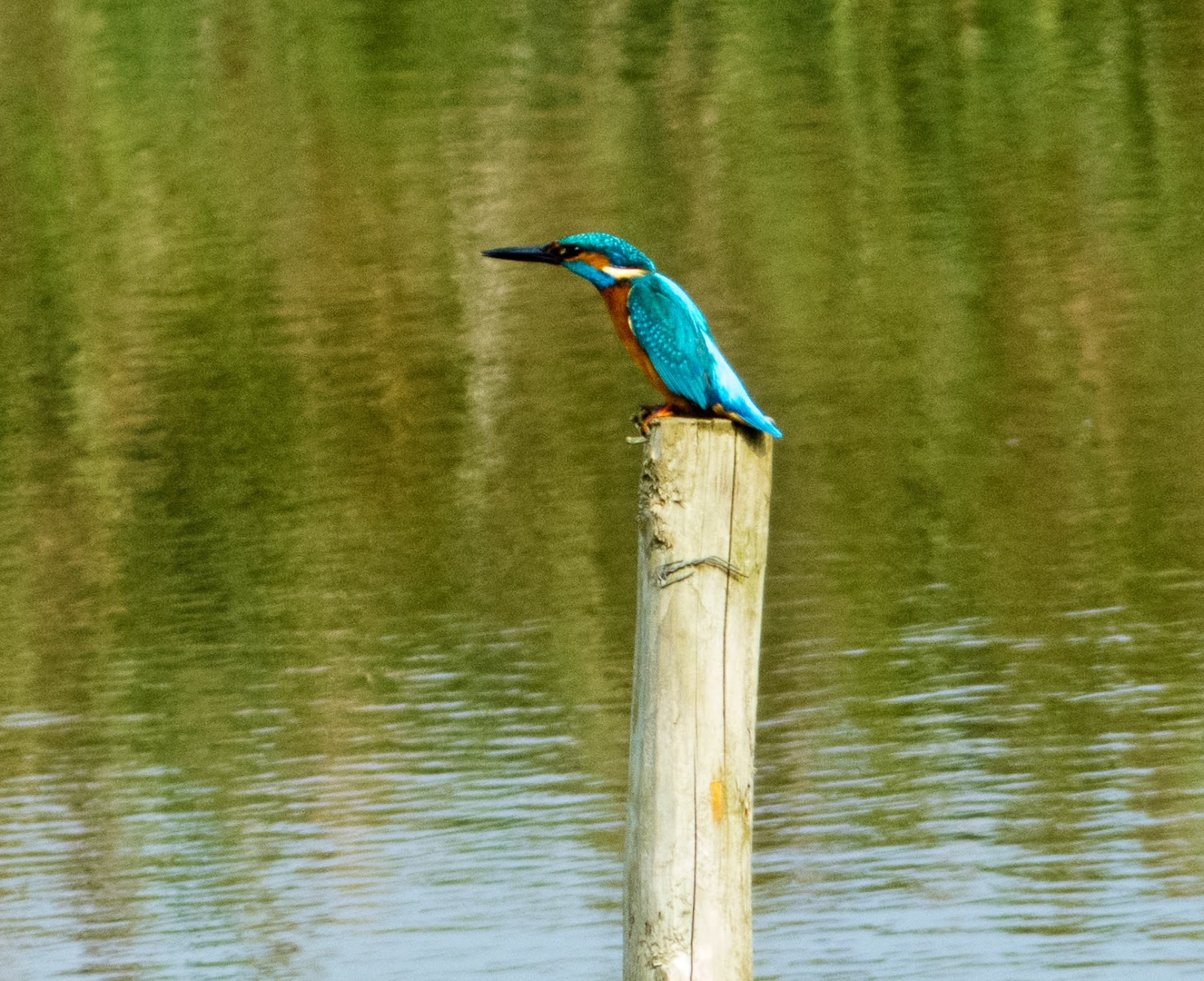
Suddenly all eyes were on one particular area of the salt marsh, when a Kingfisher flew into view. At first he did a spot of fishing from a post on the opposite side of the marsh.
To everyone's great delight he then posed directly in front of the hide, giving us a fantastic photo opportunity. It was elbow room only at the hide windows, of course, but I did manage to get a couple of shots before he flew off again. (Just indulge me here; I've waited a long, long time to see a Kingfisher up close!)
Although we'd heard Red Deer when we arrived, none were to be seen when we went to the Grisedale Hide. We decided instead to leave the main reserve and head for the nearby saltmarsh, which is overlooked by the Eric Morecambe and Allen hides.
A Kestrel and a Merlin were hunting in the marshland, settling briefly on nearby fenceposts. The lingering fog didn't make for very clear photos unfortunately.
Suddenly all eyes were on one particular area of the salt marsh, when a Kingfisher flew into view. At first he did a spot of fishing from a post on the opposite side of the marsh.
To everyone's great delight he then posed directly in front of the hide, giving us a fantastic photo opportunity. It was elbow room only at the hide windows, of course, but I did manage to get a couple of shots before he flew off again. (Just indulge me here; I've waited a long, long time to see a Kingfisher up close!)
 The male Kingfisher is identifiable by his all black beak; the female's beak is orange underneath.
Also, apparently the Kingfisher is actually a muddy brown colour and it is not pigmentation in the feathers that gives it its brilliant colour, but rather the structure of the feathers which causes light to be bounced around causing us to see iridescent colouration. You learn something new every day!
The male Kingfisher is identifiable by his all black beak; the female's beak is orange underneath.
Also, apparently the Kingfisher is actually a muddy brown colour and it is not pigmentation in the feathers that gives it its brilliant colour, but rather the structure of the feathers which causes light to be bounced around causing us to see iridescent colouration. You learn something new every day!
As he was sitting on this post another Kingfisher appeared and flew directly towards him. I wasn't quick enough to see if it was a female or a rival male, as they both disappeared from view. He returned fished from several different perches. This caused a bit of a stampede inside the hide as everyone dashed to whichever window he appeared in front of; it was all good natured fun though.
Now I know these are blurry shots, but I don't really care!
Here he was banging his catch on the post before he swallowed it.
To be honest, I could have stayed all day watching this beautiful little bird. I think everyone else in the hide felt the same way.
Unfortunately we had to leave to catch our train home. We will be back though, to see if we can spot these little beauties again. Thanks for visiting my blog; I hope you've enjoyed the photos.






.jpg)


